
The technical component of insulation carried out from the interior (habitable attics, roofs, walls, floors, etc.)
Published on 30.12.2025 · Isoflect Insulation technical team
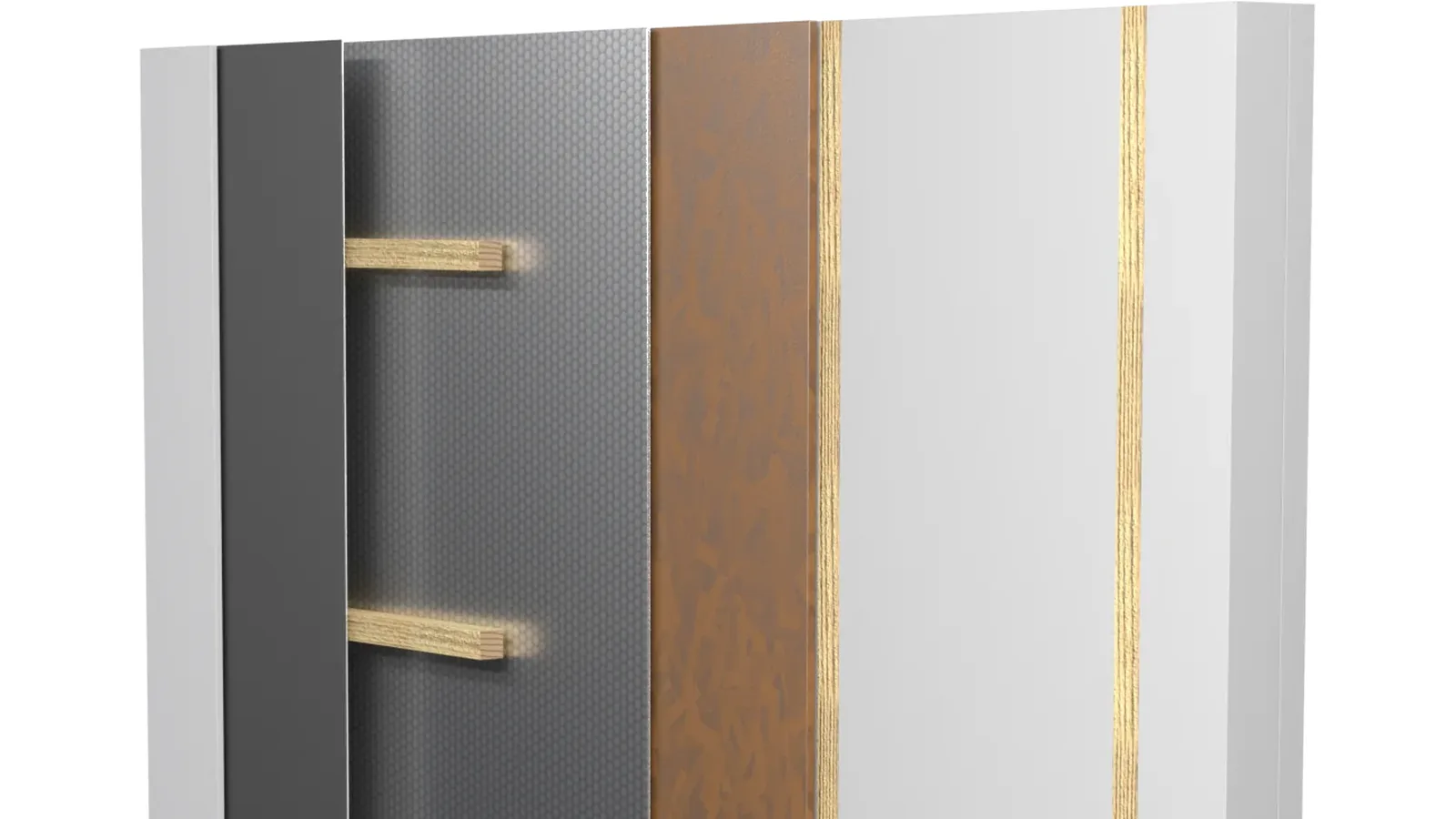
Interior insulation: the technical decision you make only once
It is not spectacular. It is invisible, difficult to access and, once installed, should never need to be touched again. That is precisely why it matters more than any finish.
Unlike finishes or furniture, insulation is not a consumable element. It is a functional component of the building, which must perform correctly throughout the building’s entire lifetime — under real conditions of use, not in ideal laboratory scenarios.
Most insulation solutions are chosen on the basis of incomplete criteria: thickness, price per square metre or thermal conductivity values obtained under standardised conditions. The problem arises when these values are extrapolated directly to real conditions, without taking into account humidity, temperature variations, material ageing, settlement and interaction with the building structure. This is the source of the major differences between declared and actual performance.
Isoflect Insulation starts from a different approach. It does not develop isolated products, but complete insulation ecosystems, designed to function coherently. The aim is not to obtain a good value in a one-off test, but to maintain performance over time, under real operating conditions, without degradation and without compromising health and indoor comfort.
Why is “Green” no longer to our liking? Because it is a phrase used widely across almost all industries and, in most cases, it conceals characteristics that bear no relation to the concept of clean, ecological and compatible with people’s real needs.
Isoflect Insulation is moving from Green to Clean: the option for those who choose insulation that is 100% friendly to both the environment and human health. This is the direction around which the company’s strategy will be developed in the coming years.
Three questions that few people ask correctly
How long must the insulation perform?
The correct answer is not ten or twenty years, but the entire lifetime of the building. Insulation lies beneath finishes, structures and services, and replacing it entails costly demolition. A material that loses its properties within 10–50 years is not a solution, but a postponed problem.
How old will you be when the problems appear?
This is the most personal question. The insulation chosen today must perform correctly for generations to come, without depending on interventions or corrections. Stability over time becomes more important than any declared one-off value.
What is the real cost?
The real cost is not limited to the material. It includes the additional structure, installation time, loss of space and the risks of degradation over time. A thinner yet effective solution reduces all these indirect costs and delivers a predictable result.
Thermal bridges: the loss that conventional insulation ignores
In most buildings, the thermal bridges generated by the structure represent a major source of losses, and conventional insulation ignores them or treats them insufficiently. System 10 is designed to reduce and balance these bridges at system level, not through isolated solutions.
Interstitial moisture: inevitable, but manageable
Interstitial moisture occurs in an occupied building regardless of the solution chosen. The problem is not its occurrence, but the manner in which it is managed. Materials that absorb or retain moisture degrade, lose their volume and become a favourable environment for mould. Thermal conductivity deteriorates rapidly, and actual performance falls well below the declared values.
System 10 addresses this problem by controlling the temperature of the interior layer and the vapour flow, so that the insulation operates in a stable regime, close to that of the laboratory. Using “reverse engineering”, Isoflect Insulation has created materials that eliminate the problems that occur with conventional insulation.
The air you breathe
Insulation directly influences indoor air quality. Heavily chemically treated products release volatile, extremely toxic substances for years, affecting the health of people who spend time in those spaces. For this reason, System 10 is explicitly designed for interior applications, with safe materials, free from irritants, free from odours and without adverse effects on the air breathed.
If you need protective equipment, the material is telling you something
The installation experience is a very good indicator of a material’s safety. If a product requires special protective equipment, this says a great deal about its nature. WOLLE fibre and Isoflect Insulation membranes can be installed easily, cleanly and without discomfort — they are appreciated both by those who carry out their own works and by tradespeople. Ease of installation is not a detail, but a consequence of a correctly designed material.
Variable-Sd membranes vs. Isoflect Insulation membranes
The difference is one of philosophy and applied physics. Variable-Sd membranes react to humidity, attempting to correct a problem that has already arisen: they allow vapour, air and heat to pass in both directions, affect the stability of the insulation and indoor air quality, leave vulnerabilities in the area of thermal bridges and age far too rapidly.
Isoflect Insulation membranes prevent the occurrence of the conditions that generate the problem, providing control that is predictable and stable over time.
The thickness dilemma in a 100 m² habitable attic
For habitable attics, the minimum required thermal resistance is 6.5 m²·K/W (in accordance with the new nZEB regulations). Conventional insulation of approximately 29 cm (λ 0.038) is generally the result of a material that functions almost exclusively through mass. This means a loss of usable height, a loss of air volume and, consequently, a loss of value of the space.R (m²K/W), thermal resistance: the extent to which the layer or assembly resists the passage of heat; the higher it is, the better it insulates. What this means →
A difference of 15–20 cm in the height of a habitable attic is not a detail, but a factor that influences comfort, the perception of the space and its use. If insulation of 10–15 cm can provide the same actual performance, the choice becomes one of logic, not of compromise.
Where do the minimum 30 cm required by conventional insulation come from? From the space and volume of your house. What is the value of the 8 m² recovered, at an average price of 1,800 euros/m²? We know. Do you?
The lost air volume remains as a bonus — we have not calculated it. For walls, the interior insulation can be reduced when an exterior system is also installed.
What does each option actually cost?
The reference question: what does insulation achieving R = 7.527 m²·K/W (U ≈ 0.13 W/m²·K) cost? Conventional insulation with λ 0.038 requires approximately 29 cm for the same value. System 10 Premium+ achieves it with 15 cm of Wolle between the rafters, plus the membranes and the air layer.U (W/m²K): how much heat passes through one m² at a difference of 1 °C between interior and exterior; the lower it is, the better (U = 1/R). What this means →
For none of the options have we added the losses of space and volume or the other drawbacks.
The cost of the insulation includes technical consultancy for every project, large or small, without exception.
You pay more at the outset. You gain throughout the lifetime of the house
Once the whole picture is taken into account — space, volume, health, stability over time — the System 10 packages are the best alternatives. They represent investments that many generations will benefit from: they give you a larger, cleaner and safer home.
Isoflect Insulation represents the modern, state-of-the-art option for insulation installed in interior spaces. All design work — of the products and of the integrated systems — started from people’s real needs, from the requirements of buildings and from the elimination of the problems of conventional insulation. Performance throughout the lifetime of the building and the sustainability of the materials, with their reuse in infinite cycles, are among the permanent objectives that guide the brand’s philosophy.
System 10 is the real alternative precisely because it is not based on ideal assumptions and does not depend on perfect conditions. It does not shift risks into the future and does not force compromises between performance, health and durability. It is a solution for those who understand that insulation is not a consumable product, but a major technical decision that must perform correctly for decades, without interventions.
Are you a homeowner, architect or builder?
Choose the appropriate package for your project and you will promptly receive a personalised quote, with technical consultancy included.
Choose the System 10 packageWould you like to develop a business with Isoflect Insulation, or do you have a technical question?
- E-mail isoflect@isoflect.cz
- Telephone +40 790 644 051
- Mobile +40 790 644 051
{% schema %} { "name": "Isoflect Interior Guide", "settings": [], "presets": [{ "name": "Isoflect Interior Guide" }] } {% endschema %}
Not sure which Isoflect product suits you? See the complete map — which Isoflect product is installed in each area of the house or open the package configurator to find out exactly what you need and in what quantity.