
Leading solutions for habitable attics that overheat in summer
Published on 25.09.2026 · Isoflect Insulation technical team
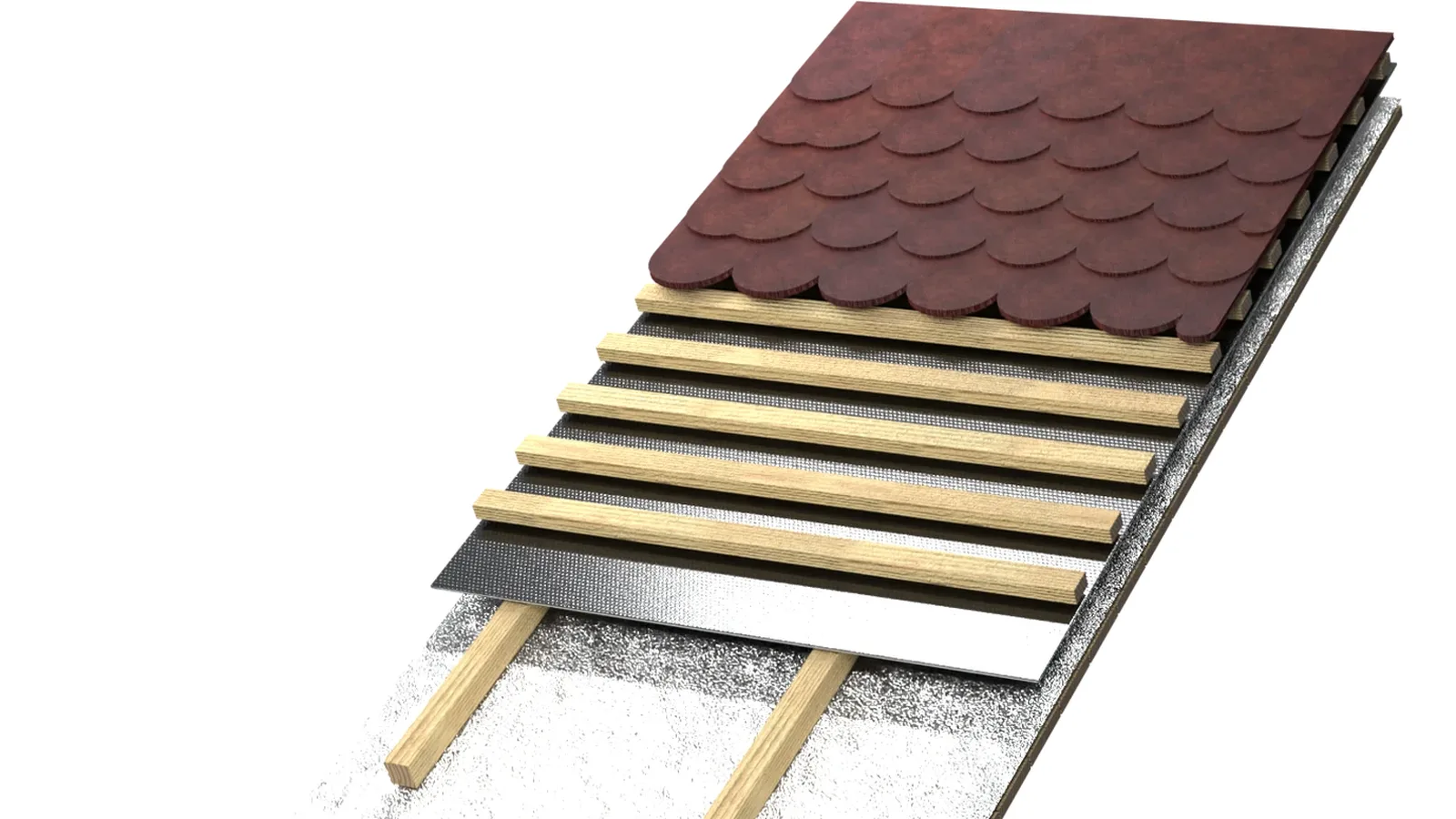
When the ceiling of the habitable attic radiates heat at 22:00, the problem is not merely discomfort. The roof has accumulated solar energy for hours, and this energy reaches the living space through an insufficiently protected system. The best top solutions for overheating habitable attics do not consist of a single, thicker material, but of a correctly designed assembly: a ventilated roof covering, a continuous thermal insulation layer, vapour control, sealing and the elimination of thermal bridges.
An efficient habitable attic must remain tolerable in summer, retain heat in winter and not create concealed condensation within the structure. These objectives influence one another. For this reason, choosing materials solely on the basis of the price per roll or the declared thickness may lead to costly interventions after the first winter or the first heatwave season.
Why a habitable attic overheats, even when it is insulated
Heat enters through the roof mainly by way of solar radiation absorbed by the roof covering. Dark-coloured metal sheeting, for example, can reach very high temperatures. If there is no functional ventilation channel beneath the roof covering, if the membrane is incorrectly installed or if the insulation has gaps, thermal energy migrates towards the interior much more rapidly.
Another frequent cause is insufficient thickness of the thermal insulation between the rafters. The space available between the timber members often limits the thickness of the material, and the rafters themselves remain thermal bridges. Timber insulates better than metal, but less well than a high-performance layer of mineral or ecological wool. In other words, insulation installed only between the rafters leaves paths through which heat passes more easily.
Roof windows, chimneys, cable penetrations and wall junctions should not be overlooked either. An unsealed area does not merely admit draughts. It may allow interior vapour to enter the thermal insulation layer, where it can condense when temperatures fall.
Top solutions for overheating habitable attics: the system that matters
1. Correct ventilation beneath the roof covering
The first protective layer is the ventilated space between the roof covering and the membrane beneath the roof. Air must be able to enter at the eaves and exit towards the ridge, without obstructions caused by insulation, incorrectly installed battens or material debris. This airflow does not cool the habitable attic as an air-conditioning unit would, but it reduces the temperature accumulated beneath the roof covering and helps the structure to dry.
The diffusion membrane or anti-condensation membrane plays an essential role here. It protects the thermal insulation from water that may accidentally penetrate beneath the roof covering and allows vapour to escape towards the exterior, provided the system is correctly chosen and installed. An ordinary membrane, not adapted to the roof, may block the drying of the structure or become a source of condensation.
Ventilation does not, however, compensate for a lack of insulation. It is one component of the system, not a stand-alone solution.
2. More than insulation between the rafters
A high-performance thermal insulation layer between the rafters is the foundation. For a habitable attic, the required thickness depends on the climate zone, the roof type, the available height, the material chosen and local energy efficiency requirements. In many projects, 10 cm or 15 cm is not sufficient for genuine comfort in summer and for reduced losses in winter.
The safer solution is to supplement the insulation between the rafters with a continuous layer below the rafters. This second layer reduces the effect of thermal bridges and creates a more uniform surface prior to the interior finish. Ecological wool may be a suitable choice where thermal comfort, noise attenuation and a material that is pleasant to handle are sought, provided that its density, thickness and position within the system are correctly determined.
Do not compress the material to make it fit the cavity. Compressed insulation may lose part of its capacity to retain air and, consequently, part of its thermal performance. It is equally important that all joints and edges are filled, including around roof windows.
3. Reflective membrane, used in the appropriate position
Reflective thermal insulation membranes can reduce radiant heat transfer, a relevant advantage beneath a roof heavily exposed to the sun. However, their performance depends on installation. For the reflective surface to work effectively against radiation, it requires a correctly oriented air cavity. When bonded directly to another material, the reflective contribution is significantly diminished.
A reflective membrane should not be treated as a universal substitute for a correctly calculated thermal insulation layer. In a well-designed habitable attic, it can complement the wool and may contribute to airtightness or vapour control, depending on the exact characteristics of the product. Not all membranes have the same vapour permeability, and not all are intended for the same position in the roof.
This is where the difference arises between a material purchased individually and a package configured for the actual build-up of the roof. At Isoflect, the choice of system starts from the installation area, not from the promise of a miracle product.
4. Vapour barrier and airtightness on the warm side
Warm interior air carries moisture. In a bathroom, kitchen, bedroom or a permanently occupied habitable attic, this moisture can be considerable. If it reaches the cold structure of the roof in an uncontrolled manner, it may turn into condensation. The consequences may include mould, degraded timber, damp insulation and a loss of energy performance.
For this reason, a membrane with an appropriate vapour control function is required on the interior side of the thermal insulation layer. All overlaps, junctions with masonry and perforations for services must be sealed with compatible tapes and accessories. A good membrane, perforated dozens of times and left unsealed at the edges, will not protect the system as it should.
A practical detail: create a service cavity between the membrane and the plasterboard. Cables and junction boxes can be routed there without repeatedly perforating the sealing layer. This is a simple measure that makes installation more predictable and reduces the risk of subsequent remedial work.
Solutions with limited effect when applied on their own
An air-conditioning unit can make the habitable attic usable on very hot days, but it does not stop heat transfer through the roof. It will run longer, consume more and may create unpleasant temperature differences between rooms. It is a useful supplement, not a replacement for an efficient thermal envelope.
Paints or membranes applied on the interior without an air cavity and without substantial insulation generally have a modest effect. Likewise, roof ventilators do not resolve problems caused by gaps in the thermal insulation, thermal bridges or vapour infiltration. They can help only if the ventilation path is designed as a complete circuit.
Replacing the roof covering with one in a lighter colour can reduce solar absorption, but it is an extensive undertaking. It is worth considering when the roof is in any case nearing the end of its service life. For an interior renovation, it is often more efficient to invest first in the layers beneath the roof covering and in sealing.
The correct sequence for a predictable renovation
Before purchasing materials, check for infiltration, areas of blackened timber, degraded membrane, spaces without ventilation and the actual thickness of the existing insulation. A thermal imaging camera can help, but many problems also become visible through a careful inspection of the roof space or of the cavities beneath the finish.
Then determine the build-up of the roof from the exterior to the interior: roof covering, ventilated channel, roofing underlay membrane, thermal insulation, vapour control membrane and sealing, service cavity, finish. Each layer has a precise function. If the roof does not allow ventilation, if there is continuous roof boarding or if the habitable attic has complicated geometry, the solution must be adapted, not copied from a different project.
Do not leave the details until the end. The junctions at the ridge, eaves, dormers, roof windows and external walls often determine the result more than a few additional centimetres of material. Absolute comfort does not come from a single roll of insulation, but from an innovative, intelligent and safe system, installed without interruptions.
If the habitable attic becomes hot every summer, begin with an assessment of the existing layers and of the air path beneath the roof covering. A choice made on the basis of the actual roof structure can deliver reliable and predictable performance, without turning every warm season into a battle with the thermostat.