Ecological wool versus mineral wool for the home
Published on 21.09.2026 · Isoflect Insulation technical team
A habitable attic that loses heat in winter and overheats in summer does not merely need “more insulation”, but the appropriate material and a correctly installed system. The choice between ecological versus mineral wool influences thermal comfort, noise levels, the behaviour of the walls with respect to moisture, installation time and the real budget of the project.
There is no universal answer. Mineral wool remains a highly effective solution for numerous applications, particularly where fire protection and the performance-to-price ratio are priorities. Ecological wool may bring clear advantages in projects that pursue natural materials, hygroscopic moisture control and pleasant indoor comfort. A sound decision starts from the area being insulated, the available thickness and the way in which the entire building envelope is constructed.
Ecological versus mineral wool: the difference in material
Mineral wool is commonly understood to mean stone wool and glass wool. They are produced from mineral raw materials processed into fibres and are available as batts, rolls or boards of various densities. They are frequently used in habitable attics, unheated attics, partition walls, ventilated façades, floor slabs and building services.
Ecological wool is a broader category, which may include natural or recycled fibres. In the case of sheep's wool insulation, the fibre has the capacity to absorb water vapour from the air temporarily and to release it subsequently, when indoor conditions change. This behaviour may contribute to a more balanced microclimate, but it does not replace the vapour control membrane, the sealing of joints or the correct ventilation of the room.
Both materials can provide effective thermal and acoustic insulation. The differences emerge in the details that matter on site: reaction to fire, density, rigidity, sensitivity to uneven installation, the manner of managing moisture and the cost of the complete system.
Thermal performance: Lambda does not tell the whole story
Thermal conductivity Lambda indicates how easily heat passes through the material. The lower the value, the better the material insulates at the same thickness. For a correct comparison, check the declared Lambda for the exact product, not merely the generic designation “wool”.
In practice, the thickness and continuity of the layer have an equally significant impact. A wool with a good Lambda, installed with gaps between the rafters or interrupted by thermal bridges, may lose its theoretical advantage. In a habitable attic, an intelligent system seeks to limit heat losses through the rafters, joints, the connection with the exterior walls and the area of the roof windows.
Mineral wool offers a very wide range of thicknesses and densities, which makes adaptation to different structures straightforward. Ecological wool is a good choice when a flexible insulation is desired that fills the spaces between timber elements well. In both cases, the thickness should not be chosen “by eye”. It is calculated according to the roof build-up, the local climate, the available space and the energy efficiency objective.
Moisture: the material cannot correct a faulty roof
The most costly mistake is not choosing a material a few millimetres thinner. It is ignoring moisture. Warm indoor air carries vapour, which may condense in the insulation layer or on the roof timber if it encounters a cold, unprotected zone.
Ecological wool based on natural fibres can partially regulate variations in humidity through absorption and desorption. This is a useful advantage in a correctly executed construction with compatible layers. It is not, however, a licence to omit the vapour control membrane on the interior side or the diffusion membrane on the exterior side, where the project requires them.
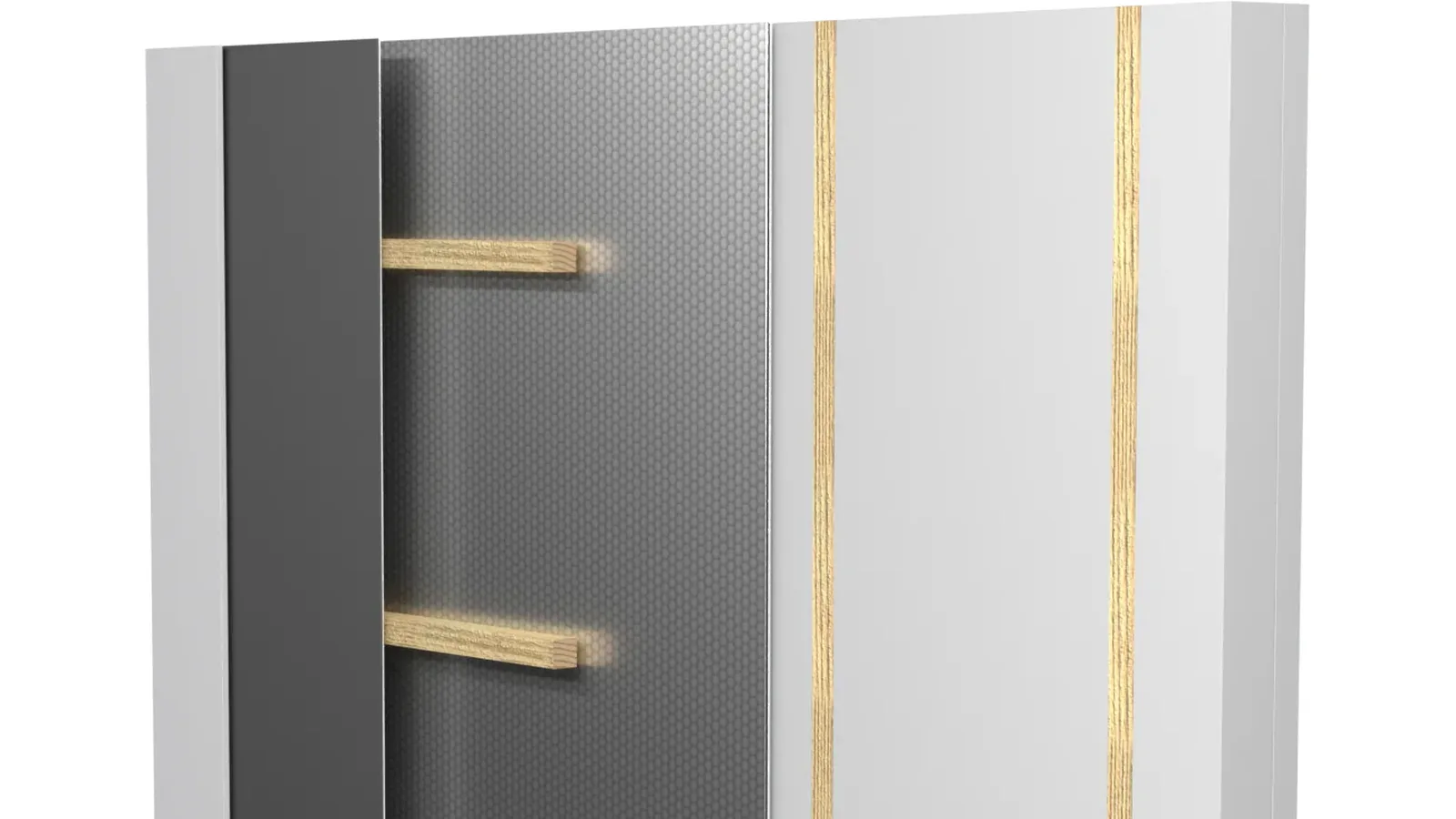
Mineral wool is not a hygroscopic regulating material in the same way. It must be protected against infiltration and persistent condensation, since moisture reduces the thermal efficiency of any fibrous material. For habitable attics, unheated attics and pitched roofs, the safe solution is an assembly consisting of the roof covering, a ventilation space, an anti-condensation or diffusion membrane, insulation, a sealing layer and the interior finish.
Sealing is the critical point. A good membrane left with perforations at cables, light fittings or untreated joints will not correctly control the flow of air and vapour. Sealing tapes, sleeves for penetrations and correctly taped overlaps make the difference between a predictable installation and one that develops problems after a few seasons.
Acoustic insulation and indoor comfort
For interior walls, lightweight floor slabs and habitable attics, both types of wool help to attenuate airborne noise. An acoustically effective structure does not rely solely on filling the void between the profiles. The density of the material, the mechanical decoupling of the linings, the number of plasterboard layers and the perimeter sealing all matter.
Mineral wool is very frequently used in partition walls precisely because of its availability in boards and batts adapted to metal or timber structures. Ecological wool may be preferred by owners who seek the feel of a natural material and a composition with reduced environmental impact. For bedrooms, home offices or rooms fitted out in a habitable attic, acoustic comfort is achieved through the system, not through the promise of a single product.
Fire safety: the criterion that may decide the choice
In areas with strict reaction-to-fire requirements, mineral wool generally has a significant advantage. Mineral products are frequently chosen for applications where a non-combustible material or one with a higher fire classification is required. Nevertheless, the exact class must be verified in the product's technical data sheet and assessed against the local requirements for the building.
Ecological wool requires the same attention to technical documentation. Fire behaviour depends on the type of fibre, the treatments applied and the structure in which it is installed. Do not compare two materials solely on thickness or price per pack. Compare the certifications, the field of application and compatibility with the construction solution.
Installation: where the real performance losses occur
Mineral wool may irritate the skin and respiratory tract during handling, so installers must use appropriate protective equipment. It is easy to cut and adapts well between rafters or profiles, but it must be installed without excessive compression and without lateral gaps.
Ecological wool may be more pleasant to handle, depending on the product, but it has its own requirements. It must be cut precisely, correctly supported within the cavity and protected from accidental wetting during the works. In the case of insulation between rafters, the material must occupy the space uniformly, without areas left empty around beams, chimneys or building services.
Before installation, check three things: the spacing between the structural elements, the thickness available up to the finish and the routing of building services. If the electrical installation, ventilation or pipework are planned after insulating, the sealing layer will be perforated unnecessarily. An interior service cavity for building services can protect the membrane and make subsequent interventions simpler.
The correct cost is calculated per system, not per roll
The price per square metre is a useful reference, but it is not the final cost. A realistic comparison includes the thickness required for the same thermal performance, the membranes, sealing tapes, accessories, cutting waste, labour and the risk of repairs caused by condensation.
Mineral wool is often the efficient choice for large areas and standardised applications. Ecological wool may justify a higher initial cost when the project places emphasis on natural materials, hygroscopic comfort and the renovation of a timber structure. For an old habitable attic, for example, the analysis must begin with the condition of the rafters and the path of the vapour, not with the choice of the colour or density of the insulation.
What should you choose for a habitable attic, an unheated attic or walls?
Choose mineral wool when the priority is a widely available solution, adaptable to fire requirements and efficient for walls, floor slabs or roofs executed in conventional systems. It is a practical option for projects in which the structural configuration and the sealing details are well defined.
Choose ecological wool when you want a solution based on natural or recycled fibres, with good moisture-buffering behaviour and an emphasis on the comfort of a timber building. Carefully verify compatibility with the diffusion and vapour control layers, as well as the documentation regarding fire and the recommended field of application.
For a sound decision, start from the complete section of the building element. At Isoflect, the configuration of a package for a habitable attic or an unheated attic can correlate the insulation with the required membranes and sealing accessories, so that each layer works to reduce heat losses and protect the structure.
The appropriate material becomes effective only when it is part of a coherent construction. Measure correctly, check the technical data sheets and treat moisture as a design requirement, not as a detail to be resolved after installation.